Training
Stronger teams. Better conversations.
You can usually tell where a team needs development long before anyone suggests running a training session.
It’s in the email that was technically correct but somehow made the situation worse.
The difficult conversation that keeps being put off.
The decision that gets escalated because someone doesn’t feel confident making the call.
Or the Property Manager who knows the process but struggles when the situation doesn’t quite fit it.
None of that necessarily means you’ve got the wrong people.
Sometimes people simply need the opportunity to develop the skills that are harder to learn from a procedure manual.
Good training should change what happens back at the office.
What do you want your people to be better at?
That’s one of the first questions I’d rather ask.
Not:
“Which training package would you like?”
But:
What are you seeing in the team now?
Are difficult conversations being avoided?
Are small issues becoming bigger because of the way they’re being communicated?
Are too many decisions being escalated?
Are your experienced people constantly rescuing everyone else — at the cost of their own work?
Or are you looking at a good team and thinking:
“They’re capable of more than this.”
Once we understand that, we can work out what the training actually needs to do.
Knowing the process isn’t the same as knowing what to do.
Technical knowledge matters. Legislation, processes and systems matter.
But property management happens between people.
It happens in conversations, decisions, emails, phone calls and those moments when somebody has to work out what to do next.
The owner doesn’t agree.
The renter is angry.
There’s information missing.
The conversation takes an unexpected turn.
And suddenly somebody has to think.
Scripts are only useful until the other person says something that isn't in the script.
That’s where communication, confidence and professional judgement become just as important as technical knowledge.
And they’re capabilities we can develop.
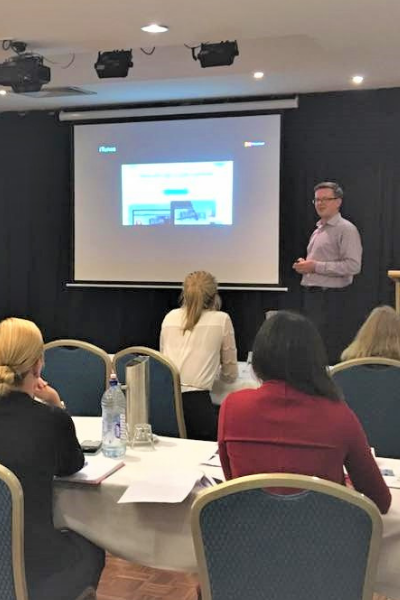
Training people can actually use.
I don’t want people leaving one of my sessions simply thinking:
“That was interesting.”
I’d much rather they leave thinking:
“I know what I’m going to do differently.”
That means working with real situations.
Talking through conversations that don’t go according to plan.
Looking at why one approach might work with one person and fail with another.
Challenging the instinct to escalate every uncomfortable decision.
And helping people understand not just what they’re doing, but why they’re doing it.
Because that’s what they’ll need when they’re back at their desk.
And sometimes it's the leaders who need to change too.
Training isn’t always about fixing something in the Property Management team.
Sometimes we need to look at what’s happening around them.
If every difficult decision gets taken away from someone, how do they learn to make difficult decisions?
If the leader always steps in when a conversation becomes uncomfortable, how does the team become more confident having those conversations?
If we’re asking people to take ownership but requiring approval for everything that matters, what are we actually teaching them?
Developing capability sometimes means resisting the temptation to provide the answer.
That’s as relevant for leaders as it is for Property Managers.
Leadership is about building capability around you — not becoming the answer to every question.
What should be different afterwards?
That’s ultimately how I judge whether training has been worthwhile.
Are people communicating better?
Are they more confident making decisions?
Are difficult conversations happening earlier?
Is the leader being asked fewer questions that somebody else could reasonably answer?
Is the team becoming better at thinking through situations rather than simply looking for the next procedure?
Because good training shouldn’t just give people more information.
It should change what they’re capable of doing with it.